

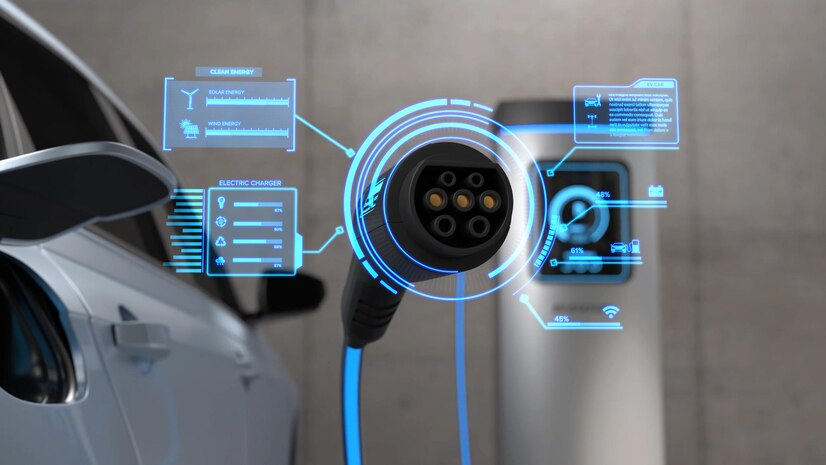
Electric vehicle fleets are no longer just a sustainability statement — they can become distributed energy assets. Vehicle-to-Grid (V2G) technology enables bidirectional power flow between EVs and the electrical grid, turning parked fleet vehicles into grid resources that can generate revenue, reduce operational costs, and improve resiliency. But deploying V2G at scale for commercial fleets requires careful orchestration across technology, economics, battery health, regulatory compliance, and cybersecurity. This article provides an actionable, advanced roadmap for fleet operators, energy managers, and automotive systems architects who want to move beyond pilots and build a robust V2G program.
Why V2G for Commercial Fleets Is a Strategic Opportunity
Commercial fleets — delivery vans, transit buses, utility trucks, and corporate shuttle services — offer predictable duty cycles and centralized parking patterns, making them ideal V2G participants. The benefits are multi-fold:
-
Revenue streams from frequency regulation, demand response, and energy arbitrage.
-
Operational cost reduction via optimized charging during low wholesale prices and discharging during peak price windows.
-
Grid services provision that can facilitate local resilience and support renewable integration.
-
Brand and sustainability leverage for stakeholders and procurement metrics.
However, capturing these benefits depends on designing systems that balance battery lifecycle preservation, reliable availability for transport missions, and compliance with market and utility rules.
Designing an End-to-End V2G Architecture for Fleets
Successful commercial V2G deployments require integration across hardware and software layers. The architecture should be modular, secure, and vendor-agnostic where possible.
Core technical components
-
Bidirectional chargers and power electronics — rated for the fleet’s voltage and power envelope with standards compliance (e.g., ISO 15118, OCPP extensions).
-
Fleet energy management system (FEMS) — real-time orchestration engine that schedules charging/discharging based on vehicle schedules, market signals, and grid constraints.
-
Telematics & state-of-health (SoH) analytics — vehicle-level telemetry feeding SoC, SoH, and predicted availability to the FEMS.
-
Market gateway — interface to wholesale/retail markets, aggregators, and utilities for bidding and settlement.
-
Cybersecurity and identity layer — PKI, secure over-the-air updates, and role-based access control.
Integration best practices
-
Edge intelligence at depot chargers: push deterministic charge/discharge rules locally to preserve vehicle mission-critical availability even if cloud connectivity is lost.
-
API contracts between OEM telematics, charger vendors, and FEMS: define minimum data models (SoC, charging power limits, available window, SoH metrics).
-
Digital twin modeling of fleet and individual batteries to run “what-if” scenarios for pricing, degradation, and mission risk.
Economic Models and Revenue Stacking
A robust V2G business case uses revenue stacking — combining multiple grid services to maximize return while minimizing cycle depth exposure.
Primary revenue streams
-
Frequency response / regulation — fast, short-duration dispatch suitable for fleets with frequent short idle windows.
-
Demand charge management — shave peak depot loads by discharging during utility peak demand intervals.
-
Energy arbitrage — charge on low-price periods and discharge on high-price intervals.
-
Capacity or reserve markets — committed availability during stress events.
Financial modeling considerations
-
Marginal value per cycle vs. battery replacement cost — compute net present value (NPV) per kWh cycled, factoring in depth-of-discharge (DoD) and temperature effects.
-
Opportunity cost of vehicle downtime — quantify lost revenue from diverted vehicles or delayed dispatch.
-
Incentive programs and tariffs — account for local demand response incentives, time of use (TOU) differentials, and possible utility credits for DERs.
-
Aggregator fees and settlement latencies — realistic revenue must subtract third-party aggregator commissions and time lags in settlements.
Practical approach: run scenario modeling for conservative, base, and optimistic market price forecasts and include sensitivity to battery degradation assumptions.
Minimizing Battery Degradation: Technical and Operational Strategies
Battery degradation is the largest operational risk in V2G. Minimizing accelerated wear requires both charging control and fleet-level policy.
Mitigation tactics
-
Cycle depth capping — limit maximum discharge per event (e.g., 10–20% DoD) to extract grid value while preserving lifecycle.
-
SoH-aware dispatch — prioritize healthier batteries for V2G participation; progressively reduce cycles on aging packs.
-
Temperature management — integrate thermal controls in depot environments and prevent V2G discharge during extreme temps.
-
Adaptive charging algorithms — use predictive SoC forecasts to avoid unnecessary full charge/discharge actions and rely on fast, shallow pulses for ancillary services.
-
Compensation and warranty models — negotiate OEM warranties or battery performance guarantees tied to controlled V2G operations.
Monitoring and metrics
-
Equivalent full cycles (EFC) tracking at vehicle and fleet levels.
-
Cost per degraded kWh— translate observed degradation into monetary terms relative to revenue earned.
-
Mission-availability SLA — continuous monitoring of trips delayed or impacted by energy scheduling.
Grid Integration, Regulatory & Market Considerations
V2G sits at the intersection of transportation and energy regulation. Market participation rules and interconnection requirements vary by jurisdiction and utility.
Key regulatory factors
-
Interconnection standards and safety requirements — ensure compliance with local utility interconnect policies and vehicle isolation standards.
-
Metering and settlement — proper metering granularity (sub-metering at charger level) and verified telemetry for market participation.
-
Aggregation rules — many markets require aggregation to meet minimum MW thresholds; understand aggregator registration and compliance obligations.
-
Tariff structures — demand charge structures, export limits, and net metering policies affect the V2G business case.
Practical steps
-
Engage early with local utilities and ISOs to clarify technical and contractual requirements.
-
Pilot in a region with clear DER participation frameworks or pilot programs hosted by utilities to simplify market entry.
-
Include legal counsel specialized in energy markets to manage contracts with aggregators and utilities.
Cybersecurity, Privacy, and Operational Resilience
A V2G ecosystem expands the attack surface — connecting vehicles, chargers, and market gateways. Security failures threaten both grid stability and fleet operations.
Defensive measures
-
Zero-trust network architecture — authenticate each device and session; avoid flat network segments.
-
PKI and certificate rotation — for chargers and telematics to prevent credential compromise.
-
Anomaly detection — time-series monitoring of charging/discharging patterns to flag malicious or malfunctioning behavior.
-
Secure OTA updates — signer verification and staged rollouts for charger and vehicle firmware.
-
Incident response playbook — cross-functional team with grid operator coordination procedures.
Privacy considerations
-
Aggregate telemetry to the minimum required granularity to participate in markets while minimizing exposure of sensitive routing or driver data.
Operational Playbook: From Pilot to Scale
Scaling V2G is a staged process with measurable gates.
Stage 1 — Controlled pilot
-
Select a subset of vehicles with predictable idle windows.
-
Deploy bidirectional chargers at a single depot.
-
Validate telematics, SoH telemetry, and basic market participation.
Stage 2 — Market integration and revenue optimization
-
Onboard aggregator or integrate with wholesale market gateway.
-
Implement revenue stacking and refine price-driven dispatch algorithms.
-
Tweak battery degradation parameters based on real-world data.
Stage 3 — Fleetwide rollout
-
Standardize hardware, APIs, and SLAs.
-
Automate SoH-aware fleet balancing.
-
Negotiate fleet-level insurance and warranty terms.
Stage 4 — Continuous improvement
-
Use machine learning to forecast availability and price signals.
-
Optimize joint dispatch with on-site DERs (solar + stationary storage) to reduce cycles and increase margins.
Key Performance Indicators (KPIs) to Track
-
Revenue per vehicle per month (broken down by service).
-
EFCs per vehicle per month and cost per EFC.
-
Mission availability rate (percentage of scheduled missions unaffected by V2G).
-
Round-trip efficiency of chargers and vehicles.
-
Security incidents per year and mean time to detect/resolve.
Conclusion
V2G for commercial fleets is a high-value but complex proposition. Technical readiness, sound economics, careful battery management, regulatory navigation, and rigorous cybersecurity are all non-negotiable. Fleet operators that invest in modular architecture, data-driven SoH policies, and smart market participation can transform their EVs into revenue-generating grid assets — while preserving vehicle missions and battery longevity.