

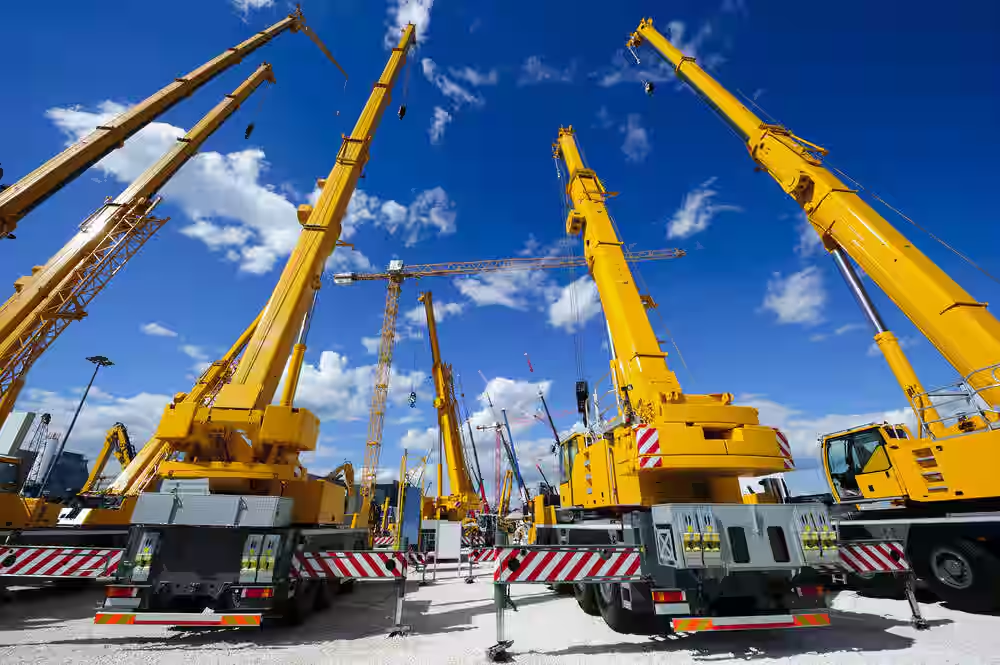
Drive through any expanding industrial zone or transport corridor and you will notice how often heavy components appear briefly and then vanish again once installed. Bridges, utility frameworks, plant upgrades, and prefabricated structures all rely on short windows of precision lifting rather than continuous on-site machinery. This growing dependence on adaptable equipment explains why many project planners look closely at the capabilities of a mobile crane in Thailand when coordinating regional infrastructure work across varied terrain and access conditions.
Mobility changes how projects sequence their work. Instead of building extensive fixed lifting infrastructure, teams can bring lifting capacity exactly when required and remove it once the task is complete. This reduces site congestion and allows multiple contractors to share limited working space more efficiently.
Unlike permanent cranes, mobile units adapt to road networks, temporary staging areas, and uneven terrain. Their flexibility becomes especially valuable in regions where development spreads across mixed urban and rural environments.
Adapting to Remote and Constrained Locations
Infrastructure projects rarely unfold in ideal settings. Coastal works, hillside developments, industrial estates, and narrow roadside installations all present unique access challenges. Mobile lifting equipment can navigate smaller roads, temporary tracks, and constrained footprints that would prevent larger fixed installations.
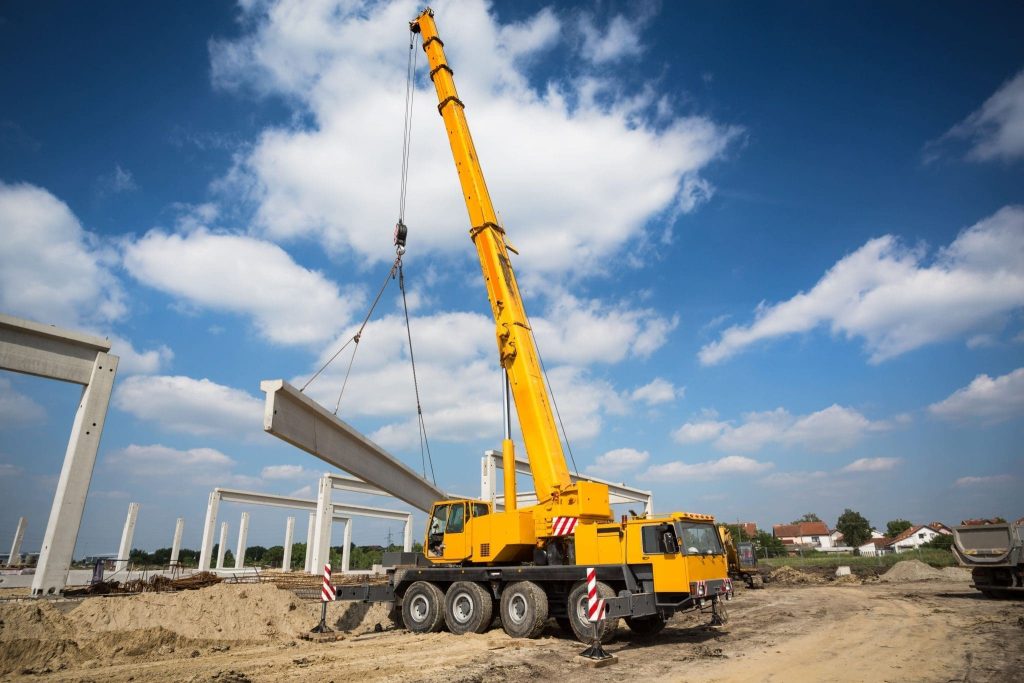
Setup speed also matters. Short installation windows, particularly in transport corridors or live operational facilities, benefit from equipment that can arrive, operate, and demobilise quickly. Reduced setup complexity limits disruption to surrounding activity and improves overall project coordination.
Supporting Modular Construction Methods
Prefabrication has reshaped how infrastructure is delivered. Components are increasingly manufactured off-site and transported for rapid installation. Mobile lifting equipment enables this modular approach by providing accurate placement without extended on-site assembly.
This reduces exposure to weather delays and improves quality control. Precise lifting allows components to align correctly first time, reducing rework and installation risk.
Enhancing Safety Through Controlled Handling
Large infrastructure components often involve awkward shapes, high centres of gravity, or sensitive connection points. Controlled lifting reduces manual handling risks and minimises strain on surrounding structures.
Modern lifting systems integrate monitoring tools, load control features, and operator visibility enhancements that support safe execution even in confined spaces. Careful planning and coordination remain essential, but equipment capability provides an important safety margin.
Temporary Capacity for Peak Demand
Infrastructure programmes experience fluctuating demand for lifting capacity. Permanent assets may sit idle between major phases, creating inefficiency. Mobile solutions allow capacity to scale up temporarily during peak installation periods and scale down afterwards.
This flexibility supports budget control and resource efficiency without compromising operational capability.
Enabling Faster Project Turnover
Reduced setup time, faster installation cycles, and minimal demobilisation delays collectively shorten project timelines. Faster turnover benefits not only contractors but also surrounding communities by limiting disruption periods.
Efficient lifting becomes an invisible enabler of infrastructure delivery, allowing complex assemblies to appear seamlessly within tight schedules. The value lies not in constant presence, but in precise intervention at the moment it is needed.